What is the CAS number for sodium polyacrylate?
9003-04-7 is the number most suppliers use. Check the Safety Data Sheet for the grade you're buying, because different grades can be listed differently.

The questions we get on the phone about sodium polyacrylate, answered straight.
We supply it for a living, so we get asked the same things over and over: is it safe, what is it made of, what's the CAS number, does it break down. Here are the answers.
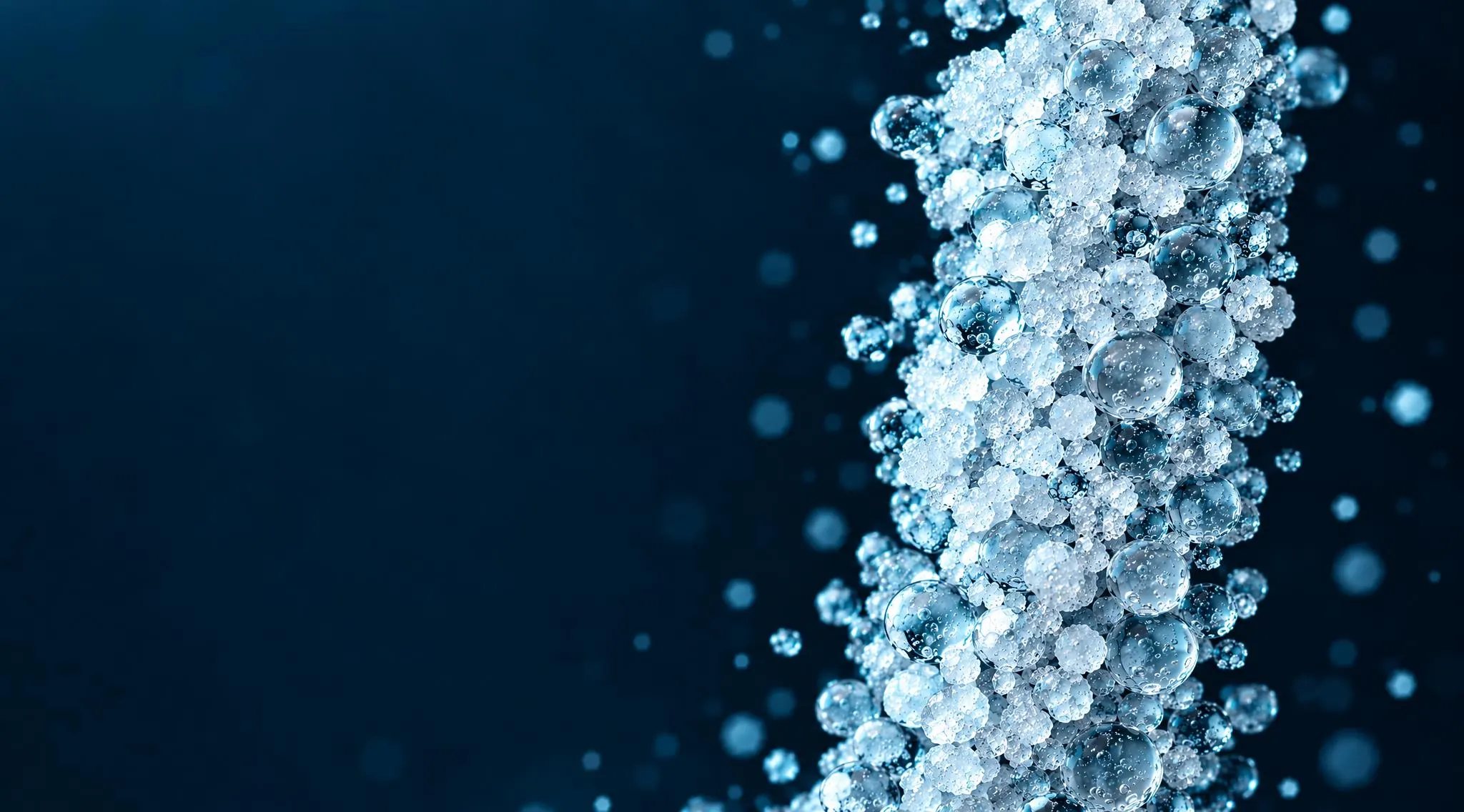
Sodium polyacrylate is a polymer made from acrylic acid. It's the sodium salt of polyacrylic acid. When the chains are cross-linked, it becomes a super absorbent polymer, a white powder that swells into a gel when it meets water. That's the form we sell.
Polyacrylate polymer is a big family. Without cross-links, the same sodium polyacrylate dissolves in water and is used as a thickener or a dispersant in things like detergents and water treatment. With cross-links, it can't dissolve. It swells and holds the liquid instead. When people talk about sodium polyacrylate in waste work, ice packs and soil, they mean the cross-linked type.
A hydrogel is a polymer network that holds a lot of water. When sodium polyacrylate gets wet, it turns into a polyacrylate hydrogel: soft, clear, jelly-like, and it keeps its shape. That's the clear gel you see when an ice pack is cut open or when a nappy is soaked.
The gel doesn't let go of the water easily, which is what makes it useful. In waste, it stops free liquid running out. In an ice pack, it keeps the water spread evenly. In soil, it holds water close to the roots.
The chemical formula of sodium polyacrylate is (C3H3NaO2)n. The n is how many times the repeating unit appears in the chain, and in a super absorbent polymer that number is very large.
Sodium polyacrylate CAS no. 9003-04-7 is the number most suppliers and data sheets use. Different grades can be listed differently, and the Safety Data Sheet for the exact grade you buy is the document to check. If you need the CAS number for a form or a compliance check, ask us and we'll send the sheet for the grade.
It starts with acrylic acid. The acid is partly neutralised with sodium hydroxide to make sodium acrylate. A small amount of a cross-linking chemical is added, then an initiator that starts the reaction. The chains grow and join up into a network, either in a water solution or as droplets suspended in oil.
The result is a soft gel. It's dried, ground and sieved into the size you want. Many grades then get a surface treatment that cross-links the outside of each granule a little more. That's what 'surface-treated' means on a data sheet. It gives the granule a firmer shell, so it keeps its shape under pressure and doesn't turn to mush. We don't run the reactors ourselves. The factories that make it do that, and we hold the stock here.
In pure water, a good grade can take up hundreds of times its own weight. That's the headline number, and it's measured in distilled water.
Real liquids aren't distilled. Salts pull against the charged groups in the polymer and hold it back, so tap water gives you much less than distilled water, and salty water or cement washout, which carries a lot of calcium, gives you far less again. For that reason we never quote a single absorption figure for a job. We test the polymer in your liquid and tell you what it holds there.
Is sodium polyacrylate safe? Used the way it's meant to be, yes, with sensible handling. The safety data sheets for sodium polyacrylate describe low acute toxicity, and it's the same family of polymer used inside nappies. Safe doesn't mean harmless, though.
Read the Safety Data Sheet for the grade you buy. Ours are prepared in line with the GHS-based Work Health and Safety (WHS) Regulations.
Is sodium polyacrylate toxic? Not in the way most people mean it. It isn't classed as acutely toxic in the data we see, and it doesn't react with water to give off anything nasty. The risks are physical ones: dust, slips and swelling in the throat or gut if it's swallowed.
Are super absorbent polymers toxic as a group? The common acrylate types follow the same pattern. The monomer left over from manufacturing is what matters most, and good grades keep it very low, which is another reason to buy a grade with a proper data sheet. If a safety question is critical to your job, send it to us in writing and we'll answer it against the data sheet.
Is sodium polyacrylate biodegradable? Not readily. A cross-linked polyacrylate is built to stay put, and that's the point of it. In the environment it breaks down only very slowly. We don't sell our grades as biodegradable.
A biodegradable super absorbent polymer does exist. Starch-based and cellulose-based products are the usual examples. They tend to hold less, cost more and break down in use, which is a problem in some jobs and an advantage in others. If biodegradability is a hard requirement, tell us before you buy and we'll say plainly whether our products suit.
The applications of sodium polyacrylate that we supply into are waste solidification, gel ice packs, paint waste, medical canisters and water retention in soil, where we use the potassium type. Outside our world it's mostly nappies and hygiene products.
Here are the polyacrylate uses we see most, with a page on each.
9003-04-7 is the number most suppliers use. Check the Safety Data Sheet for the grade you're buying, because different grades can be listed differently.
No. It swells in the pipe and blocks it. Sweep dry powder up and dispose of it as the data sheet says.
It works, but it holds much less than in pure water. We test in your liquid so you know the real figure.
We're a wholesaler in Melbourne with local stock, and we supply the whole country.
Ring or email us. If it's a safety or compliance question, we'll answer it against the data sheet for the grade.