Why does ferric or alum-dosed sludge need more polymer?
Iron and aluminium ions carry a triple charge and bind strongly to the polymer's network, which stops it swelling fully. More product, or a different grade, is needed to hold the same water.


Stop dewatered sludge and tank bottoms weeping liquid in skips, trucks and storage bays.
Sludge that looked dry coming off the press can sit in a puddle by the next morning. AuraChem tests against sludge taken after your normal dewatering step, with the coagulants and flocculants already in it, to see whether polymer treatment is a good fit.
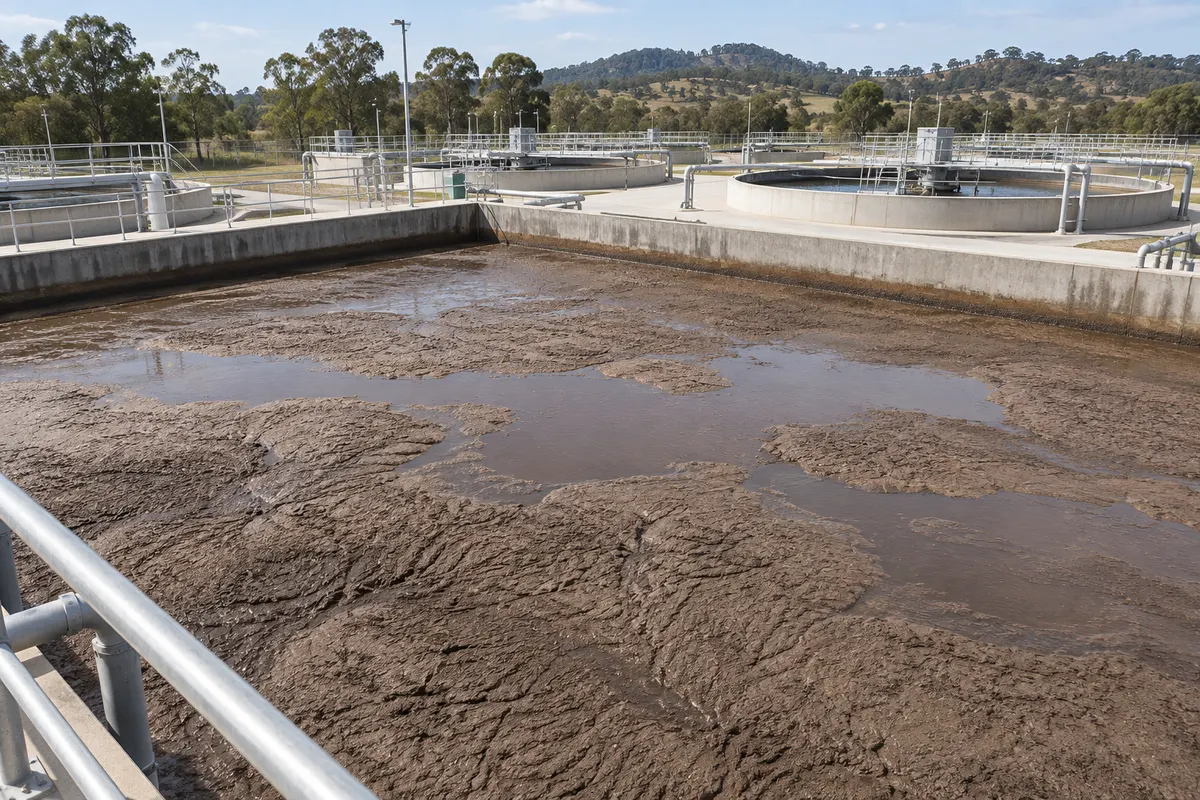
Belt presses, filter presses and centrifuges remove the water that comes away easily. What is left still has a high moisture content, much of it held loosely between fine particles and in biological floc. When the cake is jolted in a truck, stacked in a bay or left to stand, some of that water separates out again.
The same happens with sludge dug out of lagoons and settling ponds, interceptor and tank cleanouts, and wet residues from food processing, metal finishing and other industries. A skip that leaves site looking acceptable can arrive with liquid in the bottom.
Most dewatered sludge has been through chemical conditioning. Ferric chloride and alum add trivalent iron and aluminium ions, which bind strongly to a polyacrylate network and restrict how far it can swell. Lime conditioning adds calcium. A grade that performs well in clean water can lose much of its capacity in this chemistry.
Dewatering aids are usually cationic polyacrylamide flocculants, which carry the opposite charge to an anionic superabsorbent. Residual flocculant can interact with the added polymer, which is another reason screening has to use sludge from after the actual dewatering step rather than raw feed.
The polymer is blended through the cake or residue, where it captures water that would otherwise separate out during storage and transport. The aim is not to dry the sludge, but to stop it from releasing free liquid until it reaches its destination.
Because the problem often appears hours later, the test that matters is how the sludge looks after a realistic holding period and some vibration, not just immediately after mixing. Both are checked during screening.
These are potential operational benefits subject to material testing and field or production validation.
Fewer loads rejected or delayed for free liquid at the receiving site
Less leachate collecting in skips, bays and truck bodies
A contingency when a press or centrifuge is underperforming
Lagoon and tank cleanouts can be trucked without separate drying
The trial reports how much liquid untreated sludge releases after standing, how much polymer stops that release, which grade copes better with the plant's coagulant and flocculant, and how the treated cake handles. If coagulant residues reduce performance too far, the report says so, which can point to treating at a different stage.
Iron and aluminium ions carry a triple charge and bind strongly to the polymer's network, which stops it swelling fully. More product, or a different grade, is needed to hold the same water.
It can. Cationic flocculant left in the sludge can interact with an anionic superabsorbent, which is why testing uses sludge from after the plant's actual dewatering step.
Water held loosely in fine particles and biological floc separates out with standing and vibration. Testing over a realistic holding period shows whether treatment prevents this.
No. It works as a finishing step on sludge that has already been dewatered, or on cleanouts where mechanical dewatering is impractical.
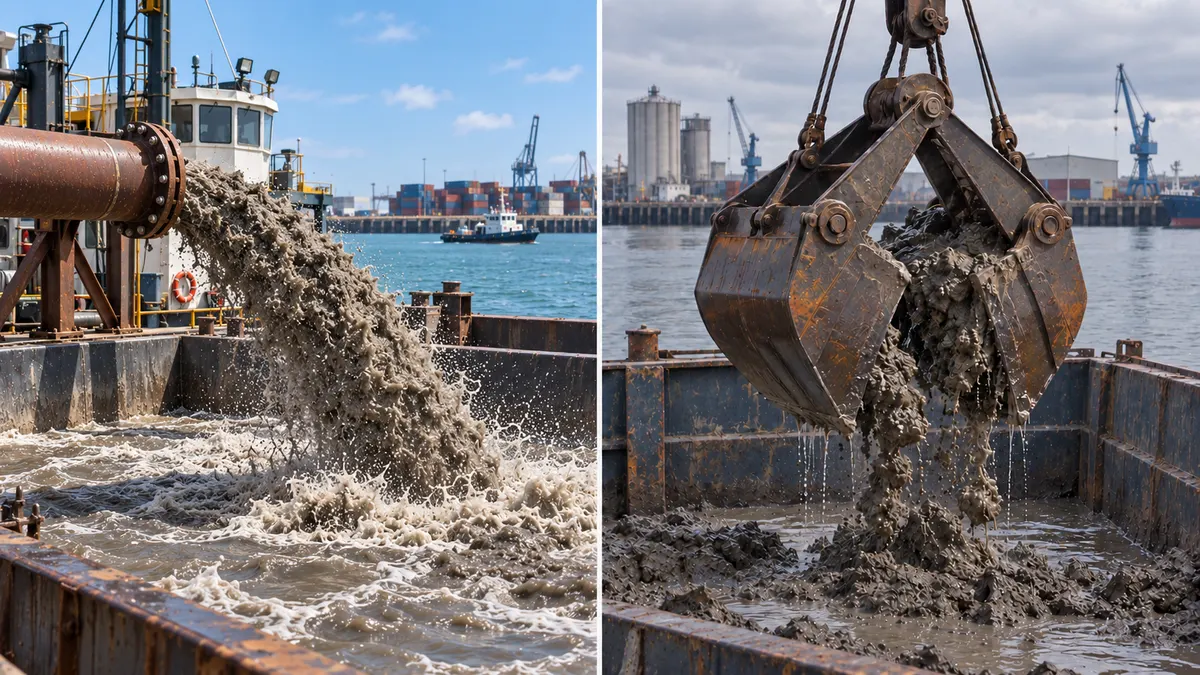
Soft organic silt from basins and marinas behaves much like lagoon sludge once it is brought ashore.
Relevant Products

Mineral processing residues carry their own reagents and saline water, much as industrial sludge carries treatment chemicals.
Relevant Products
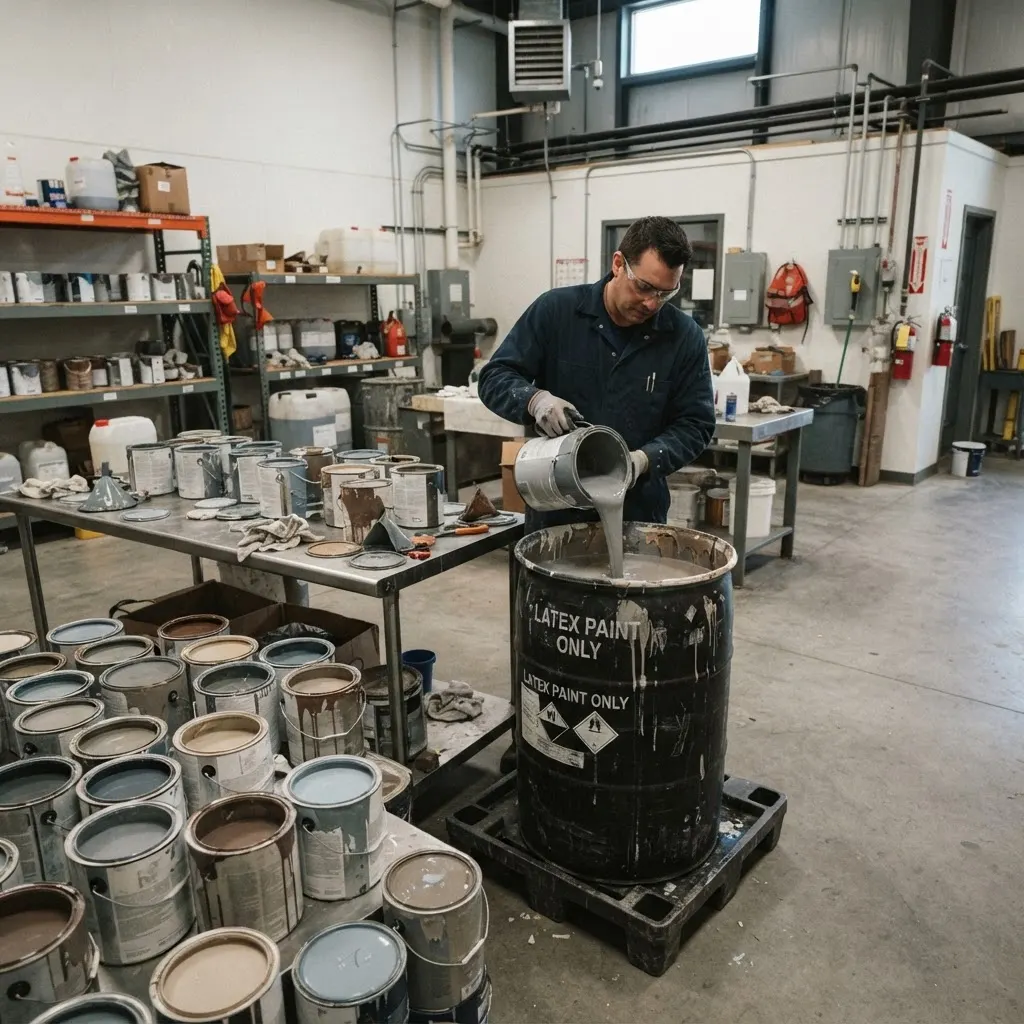
Water-based paint waste is another liquid residue treated before disposal, in drums rather than bulk.
Relevant Products
Send cake or residue from after your normal dewatering step and we will measure weep-back with and without treatment.